
SHOWA runs a 12-course tasting menu built around tonkatsu, framed with Kaiseki-inspired courses rather than katsu alone. Chef Koji Endo, who grew up in the bay town of Miho in Shizuoka Prefecture, breads cuts in a range of house panko styles — handcrafted Shokupan panko, herb-infused rice panko among them — and works with Iberico pork and dry-aged options alongside seafood sourced from Tokyo's Toyosu Market.
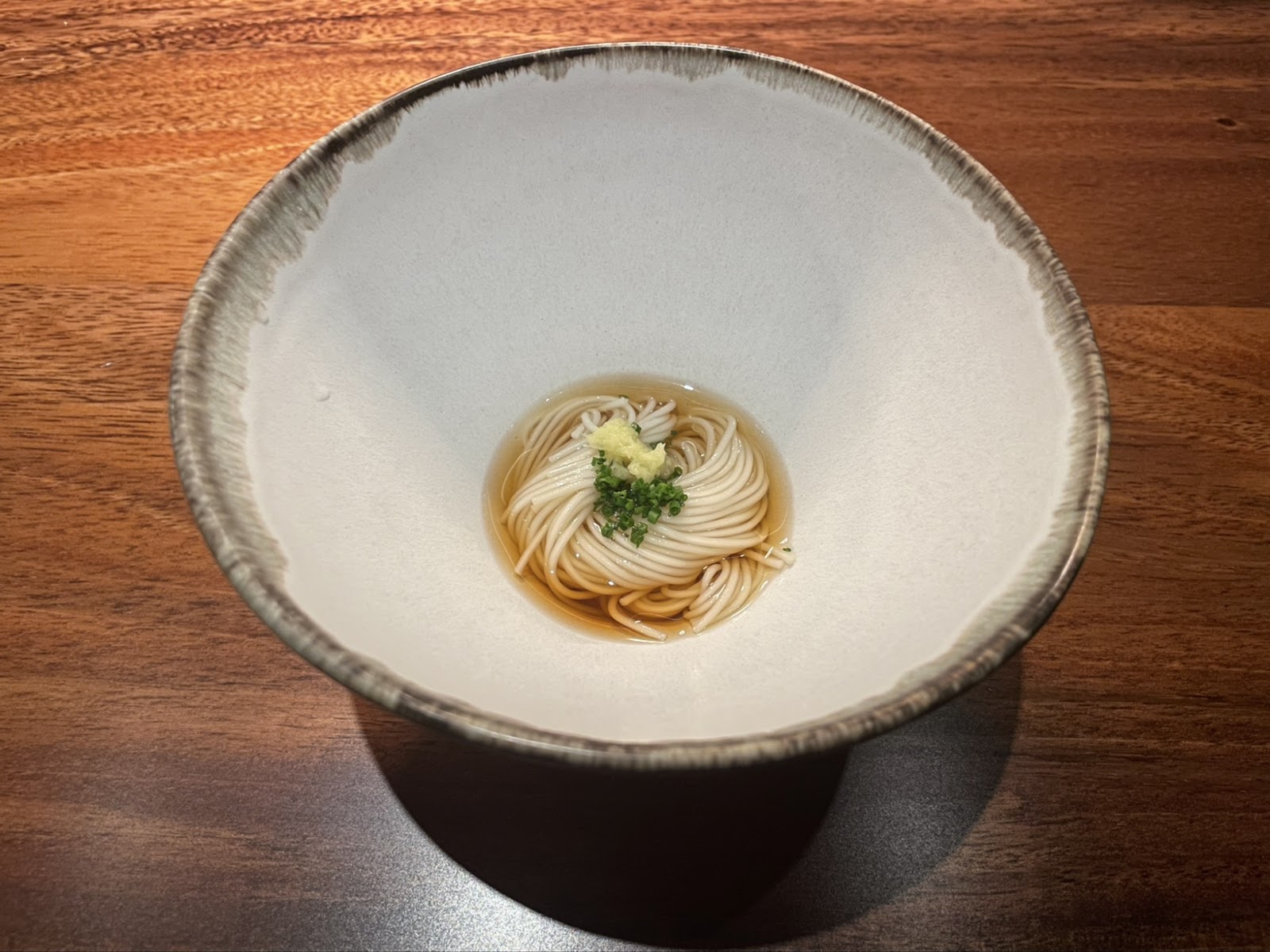
The meal opens well before the katsu arrives: early courses have included a martini glass of lotus sprouts, stewed beef tongue under a small glass cloche, dashi-simmered turnips, and a tofu take on caprese, followed by dishes like an uni negitoro handroll and a fried bluefin lettuce wrap with tartar sauce. The katsu itself is served in a procession, plated on wire racks to keep the breading from going soft.
The room is designed to evoke a bygone Japanese home, furnished with antiques and fixtures brought over from Japan, and built as an adult-oriented, intimate setting rather than a casual one. Seating is limited, and the restaurant has developed a reputation as a special-occasion destination known for close attention to pacing, presentation, and service.