
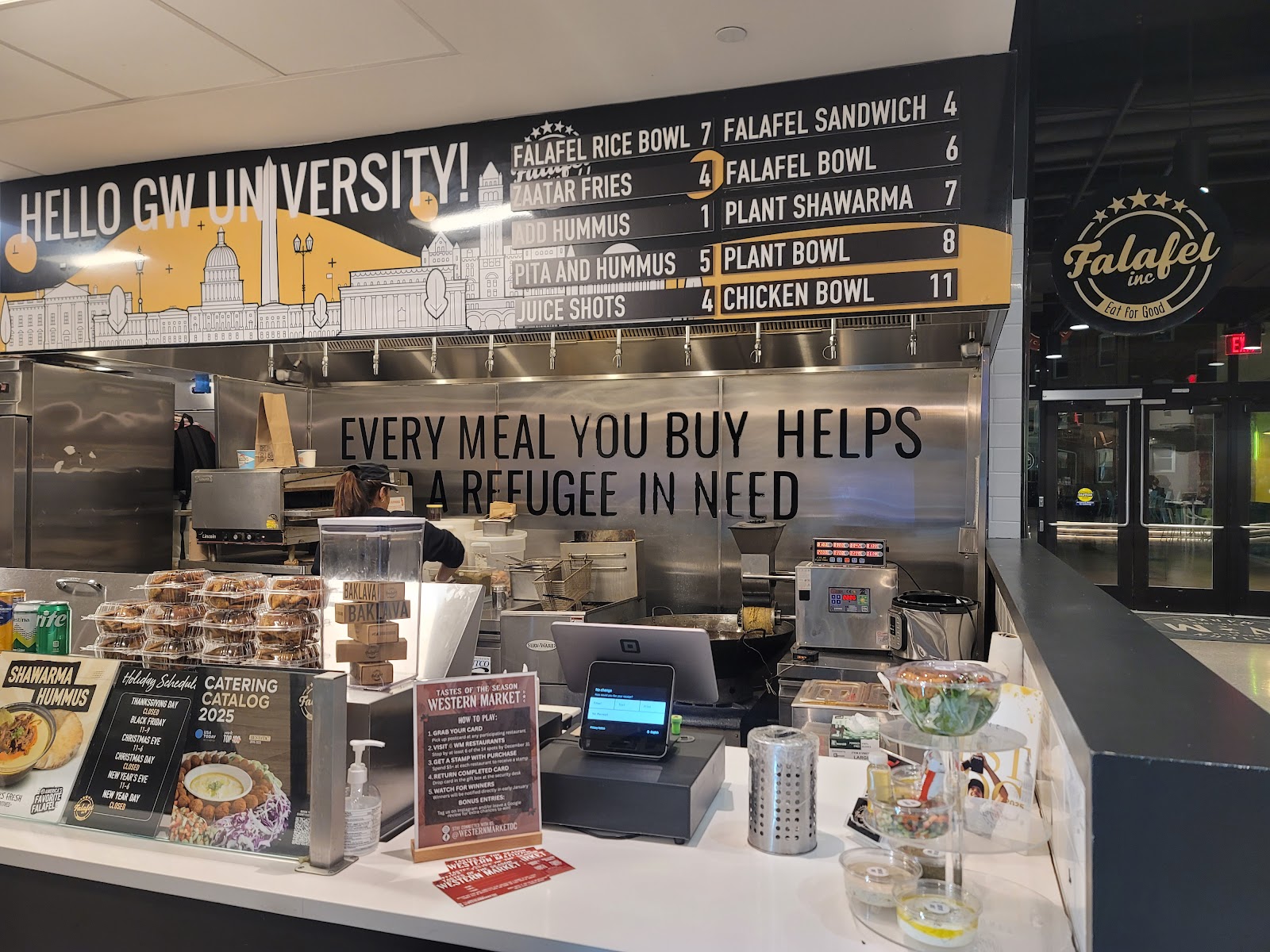
Falafel Inc runs out of a small Georgetown storefront on Potomac Street, built on a simple premise: fast, cheap vegetarian food that funds humanitarian aid. Founder Ahmad Ashkar partnered with the World Food Programme, the UN's food-aid arm, so that every purchase contributes toward feeding refugees — the brand calls it "Eat For Good."
The menu keeps to falafel sandwiches and bowls, built on pita or greens with pickled red cabbage, pali salad, and tabouli, finished with a rotating lineup of house sauces like the tahini-based mazbout and the flagship habibi. Zaatar fries, made with zaatar sourced from the West Bank, sit alongside hummus and salads as the main sides. Nothing on the menu runs past a few dollars.
Falafel Inc has since grown into catering and franchising, but the Georgetown shop remains the flagship, and it's developed a following for stretching a few dollars into a filling, mission-driven meal.
The menu keeps to falafel sandwiches and bowls, built on pita or greens with pickled red cabbage, pali salad, and tabouli, finished with a rotating lineup of house sauces like the tahini-based mazbout and the flagship habibi. Zaatar fries, made with zaatar sourced from the West Bank, sit alongside hummus and salads as the main sides. Nothing on the menu runs past a few dollars.
Falafel Inc has since grown into catering and franchising, but the Georgetown shop remains the flagship, and it's developed a following for stretching a few dollars into a filling, mission-driven meal.