
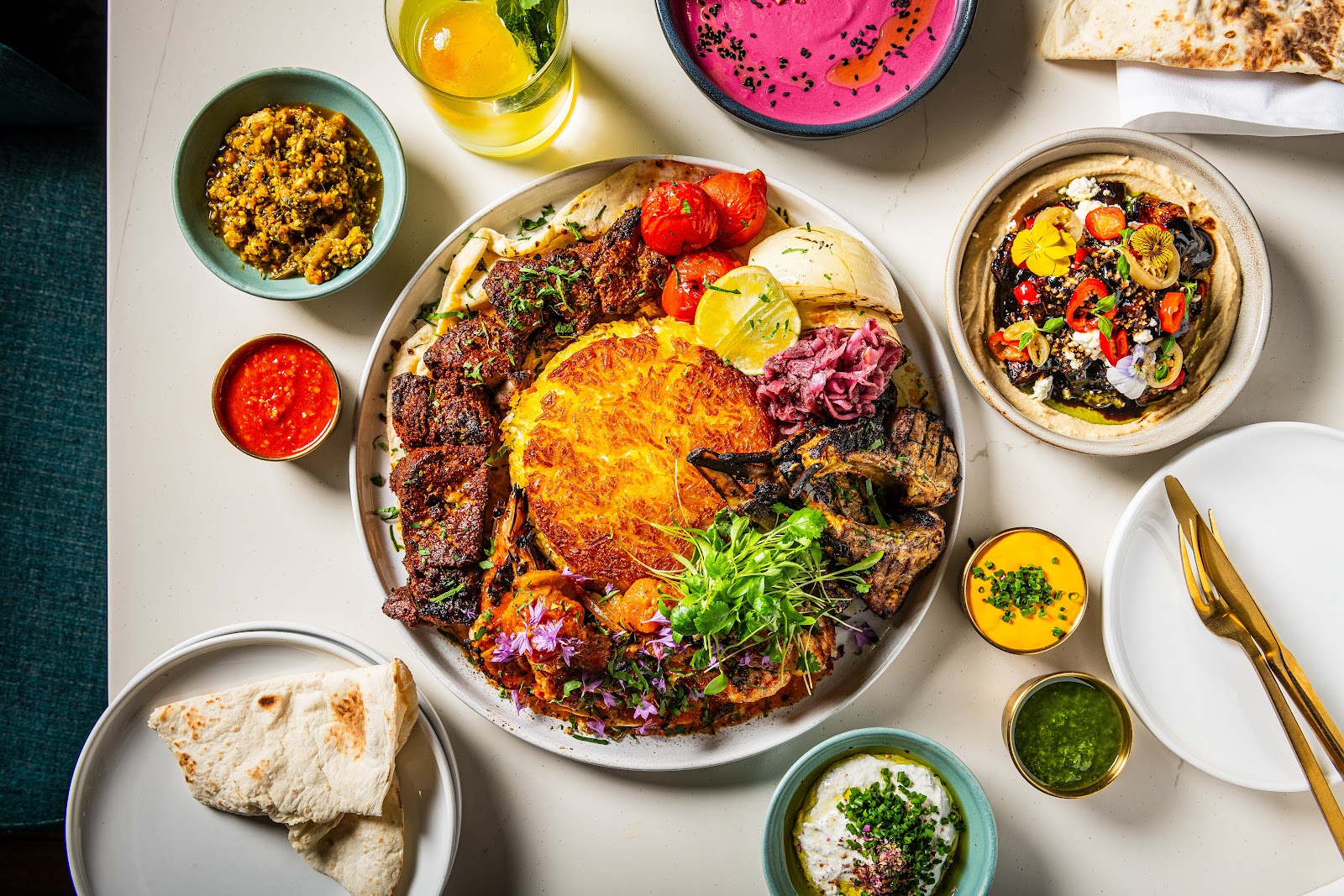
Joon brings Persian food to Tysons with a résumé that's caught the attention of national and local press alike: an Eater Essential 38 selection, a spot on Washingtonian's 2025 best-of list, a 9.1 from The Infatuation, and inclusion on The New York Times' Restaurant List in 2024. The restaurant's chef was also named a James Beard Foundation Best Chef Mid-Atlantic semifinalist that same year.
Diners describe the cooking as taking some liberties with tradition rather than sticking to a strictly classic Persian playbook, which has made it something of a talking point among guests expecting a more familiar version of the cuisine. Atmosphere and hospitality are frequently cited as central to the experience, with many treating it as a destination for special occasions.
Diners describe the cooking as taking some liberties with tradition rather than sticking to a strictly classic Persian playbook, which has made it something of a talking point among guests expecting a more familiar version of the cuisine. Atmosphere and hospitality are frequently cited as central to the experience, with many treating it as a destination for special occasions.