
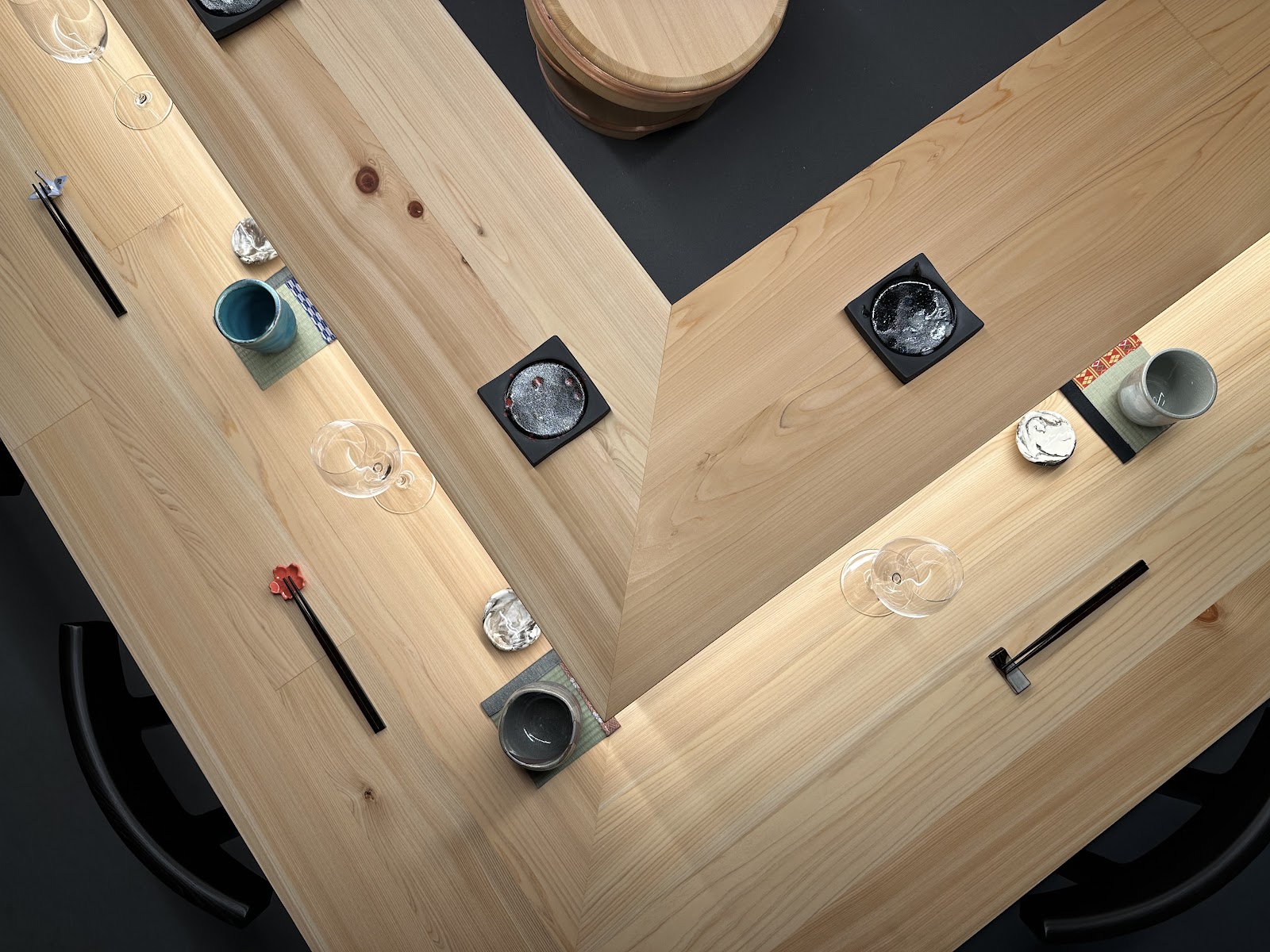
Sushi Kodawari occupies a suite inside the historic Meriden Creamery Building on Central Street in the Crossroads, one of the district's converted industrial buildings now filled with small, focused businesses. Inside is a single eight-seat counter built from hinoki wood, with no à la carte ordering — Chef Karson sends out an omakase-style set menu built around whatever is at its best that day.
The cooking draws on edomae technique developed in old Tokyo, with rice seasoned in aged Japanese red vinegar and fish that's dry-aged, cured, or pickled rather than served purely for freshness. Much of the fish is sourced from Japanese waters. Alongside the classic preparations, the kitchen also works in newer techniques and ingredients that weren't available to itamae working street stalls before refrigeration and modern shipping.
Regulars describe the room as intimate and consistent visit after visit, with Chef Karson's presence at the counter central to the experience. It has built a reputation as something of a local gem despite its small footprint.
The cooking draws on edomae technique developed in old Tokyo, with rice seasoned in aged Japanese red vinegar and fish that's dry-aged, cured, or pickled rather than served purely for freshness. Much of the fish is sourced from Japanese waters. Alongside the classic preparations, the kitchen also works in newer techniques and ingredients that weren't available to itamae working street stalls before refrigeration and modern shipping.
Regulars describe the room as intimate and consistent visit after visit, with Chef Karson's presence at the counter central to the experience. It has built a reputation as something of a local gem despite its small footprint.