
Kane sits in Cedar Park behind mood lighting, polished wood walls, high ceilings, and bamboo-partitioned tables with floor-cushion seating. The room leans toward slower, occasion-driven dinners rather than quick stops, with an omakase counter running along the front of the space.
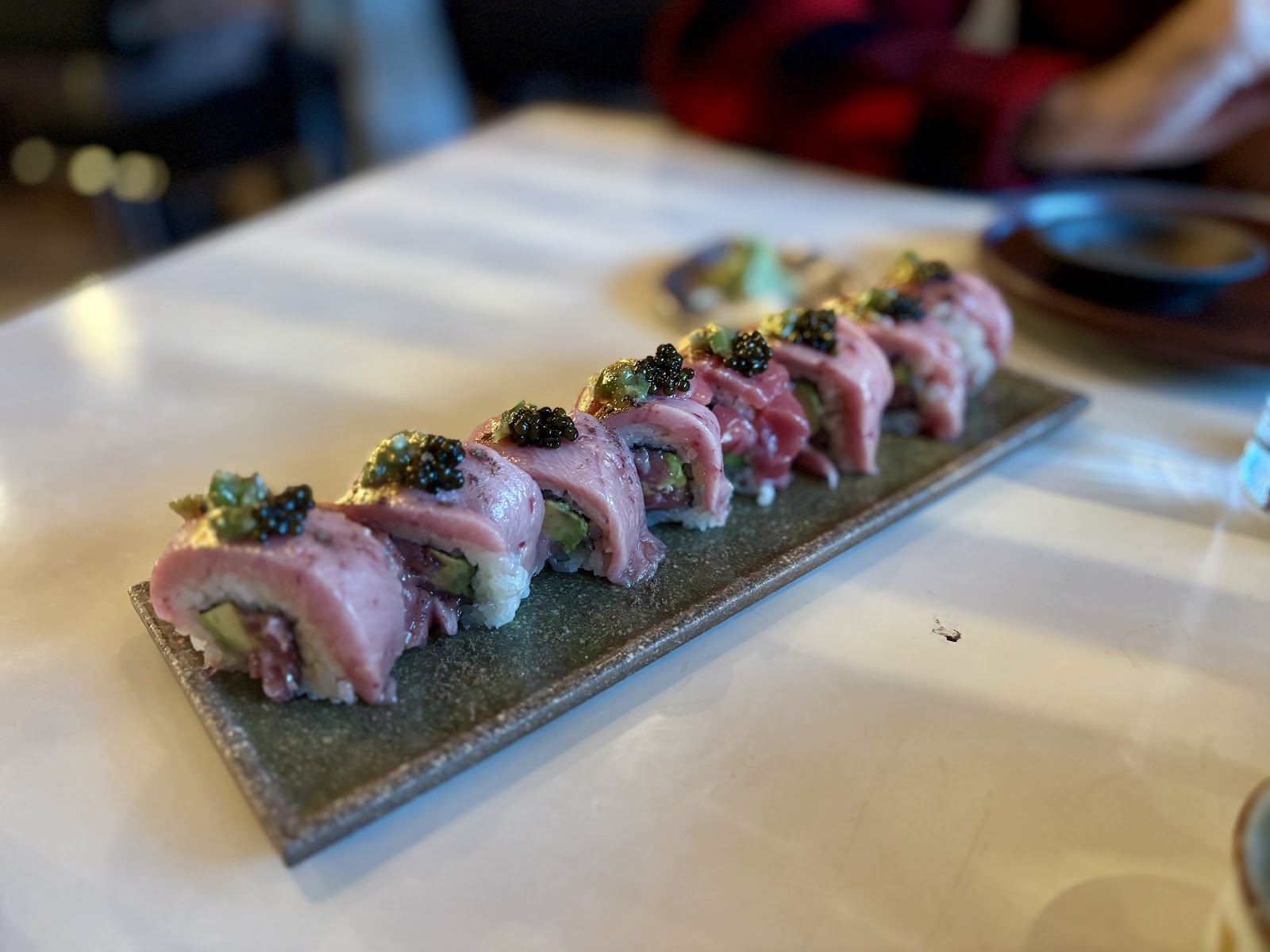
The menu moves between raw-fish specialties and cooked dishes. Dry-aged bluefin tuna, salmon, hamachi, otoro, and chu toro are offered alongside specials like ankimo (monkfish liver with ponzu) and hirame usuzukuri, thin-sliced flounder. Cooked plates include hot stone wagyu beef, unaju — grilled freshwater eel over rice — and sake-marinated cod. Maki rolls range from a lobster roll and a Big Toro roll built on fatty tuna, caviar, and truffle to a Kane hand roll stacked with shrimp tempura, tuna, and unagi.
Beyond the à la carte menu, Kane runs a counter-based omakase and kaiseki program: a 15-course omakase and a 20-course kaiseki, both built around the dry-aged fish and seasonal ingredients that define the rest of the kitchen's work.
The menu moves between raw-fish specialties and cooked dishes. Dry-aged bluefin tuna, salmon, hamachi, otoro, and chu toro are offered alongside specials like ankimo (monkfish liver with ponzu) and hirame usuzukuri, thin-sliced flounder. Cooked plates include hot stone wagyu beef, unaju — grilled freshwater eel over rice — and sake-marinated cod. Maki rolls range from a lobster roll and a Big Toro roll built on fatty tuna, caviar, and truffle to a Kane hand roll stacked with shrimp tempura, tuna, and unagi.
Beyond the à la carte menu, Kane runs a counter-based omakase and kaiseki program: a 15-course omakase and a 20-course kaiseki, both built around the dry-aged fish and seasonal ingredients that define the rest of the kitchen's work.