
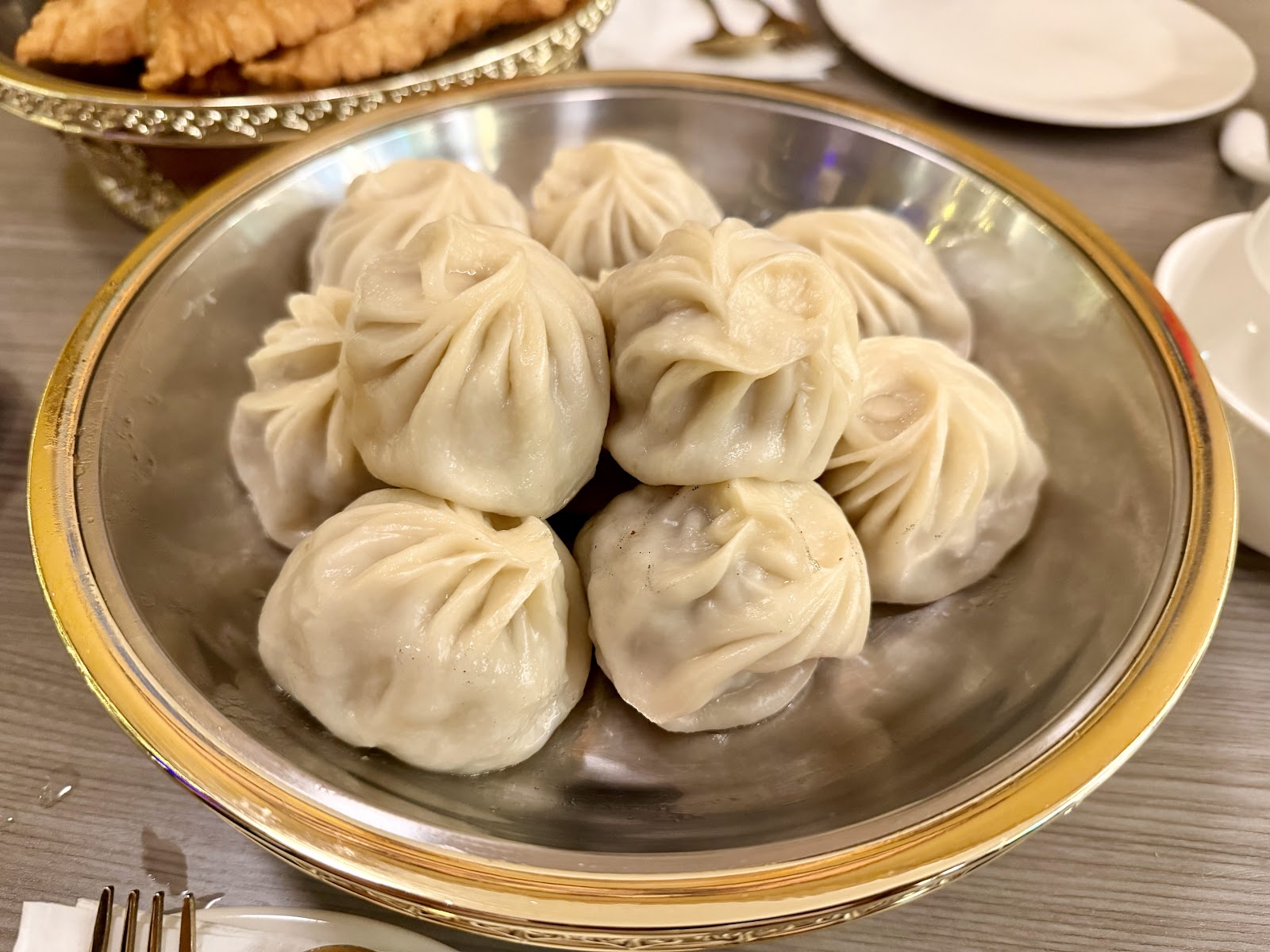
Naadam takes its name from Mongolia's midsummer festival, and the restaurant translates that gathering spirit into a casual, shared-plates room in Chinatown. The kitchen works largely off the grill and the stockpot: khorkhog, the traditional stone-cooked lamb, and a fire-charred lamb platter sit alongside hand-pulled noodle soups like lapsha and tsuivan, plus a rotating lineup of steamed and fried dumplings, including buuz made with house chili.
Broths are made in-house daily, and the dumplings are hand-folded rather than machine-made. Lamb bone soup, slow-simmered, is a standing order for regulars. The room leans into hospitality as much as food — tables are set with shagai, the ankle bones of sheep and goats used for a traditional fortune-telling game, and staff will walk guests through it or challenge them to a round of knucklebone-shooting. Photos and tapestries on the walls carry their own stories, and Mongolian music videos play at volume throughout service.
It's an unfussy, walk-in-friendly spot where portions run generous and the pace is unhurried, built for lingering over a hot bowl rather than clearing the table quickly.